

Roof leaks on commercial flat roofs often look smaller than they really are. A ceiling stain or slow drip may seem limited from inside the building, but the visible leak is often only the place where water finally shows itself. Before that happens, water may already be moving through other parts of the roof system. That is one reason flat roof leaks can spread quickly and become harder to contain than many building teams expect.
Why Water Travel Differently on Flat Roofs
One of the biggest challenges with commercial roof leaks is that water does not always show up where it first enters the roof. On a flat roof, moisture can move through insulation, along the deck, and around penetrations before it becomes visible indoors. That movement makes the problem harder to judge from inside the building.
As a result, the leak that shows up on a ceiling tile or near a wall may be several feet away from the actual entry point. A small stain or slow drip can make the issue look contained, even when moisture has already spread across a wider section of the roof assembly. That is one reason flat roof leaks in commercial buildings can grow faster than they first appear.
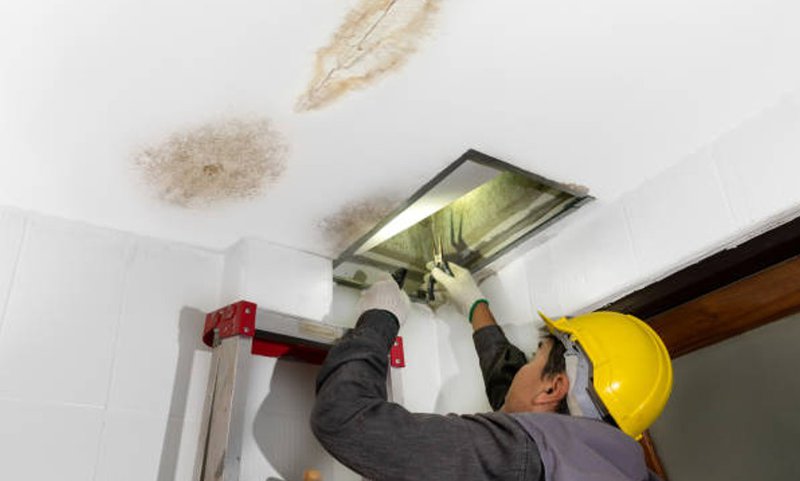
How Drainage Conditions Increase the Spread of Roof Leaks
Commercial flat roofs are built to direct water, but they depend on good drainage to do it well. When drains clog, low areas hold water, or the roof develops ponding conditions, the system stays under moisture longer than it should.
That extra exposure gives water more time to work into seams, flashing details, and penetrations. Once moisture enters the system, the leak may continue developing beyond the original weak point. What starts as a drainage issue can turn into a broader roofing problem over time.
Why Roof Leaks Often Start at Roofing Details
Flat roofs are not just wide, open surfaces. They include many transition points that have to keep shedding water over time. In commercial buildings, those details often carry more risk than the field of the roof itself.
Common problem areas include:
- flashing lines
- curb details
- parapet wall transitions
- pipe and conduit penetrations
- rooftop units
- drain and scupper areas
If one of those details starts to weaken, water may enter at that point and move into nearby materials before it becomes visible inside. That is one reason a small interior leak can point to a larger roofing issue. It also explains why follow-up through Estimates & Inspections can be important when a leak looks limited at first.
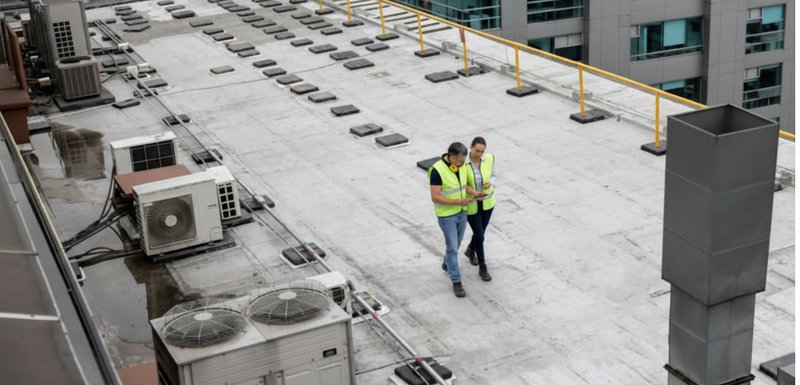
How Rooftop Alterations Can Increase Roof Leak Risk
Commercial roofs often change during their service life. Mechanical equipment gets replaced, penetrations are added, and rooftop layouts evolve to support building needs. Those changes can affect how water moves across the roof and how well surrounding details hold up over time.
A new curb, pipe, support, or rooftop unit may not cause an immediate issue, but it can introduce new stress points. If those areas are not detailed and maintained properly, they can become starting points for leaks that spread into surrounding roof sections. That is one reason Alterations & Retrofits matter in long-term leak evaluation.
Why Trapped Moisture Makes Roof Leaks Harder to Contain
Once water gets below the surface, the scope of the problem can grow quickly. Wet insulation may hold moisture, reduce thermal performance, and allow deterioration to spread beyond the original leak area.
That is what makes flat roof leaks especially deceptive in commercial buildings. The interior sign may look small, but the moisture below the membrane may already involve a larger section of the system. Some issues can be resolved through targeted Maintenance & Repair. Others may require a broader review to determine whether the leak has affected more of the roof than expected.
Why Flat Roof Leaks Need a System-Level Review
Flat roof leaks spread fast in commercial buildings because water can travel, drainage issues can hold moisture in place, and roof details can create more than one path for failure. In many cases, the visible leak is only the point where the problem becomes noticeable, not where it began.
For building teams dealing with recurring roof leaks, a more complete review of the roof system can help clarify the real scope of the issue. Delta Roofing works with commercial and industrial properties to assess roof conditions and identify the right next step before the problem spreads further.

Leave a Reply