Category: Uncategorized

  • Emergency Roofing Services: When to Call and What to Expect

    Emergency Roofing Services: When to Call and What to Expect

    ​Roof problems do not always build slowly. Sometimes the change is immediate. A section of flashing fails during a storm. Water starts entering around rooftop equipment. Wind damages part of the membrane. A leak that seemed manageable suddenly begins affecting interior spaces, equipment, or operations. That is where emergency roofing becomes important. For commercial and industrial buildings, the goal is to stabilize the situation, limit added damage and prepare for the next roofing decision.

    When Emergency Roofing Becomes Necessary

    Not every roof issue needs an emergency call. Some problems can be scheduled through routine service, especially when the building is not actively exposed and the condition is stable. However, some situations should not wait.

    Active water entry is one of the clearest examples. If water is entering during rain, or if roof damage has left part of the system exposed, the issue can worsen quickly. The same is true when flashing fails at a perimeter edge, curb, or penetration, or when storm damage creates an opening in the roof surface.

    In commercial and industrial buildings, urgency also depends on what the problem is affecting. A leak above a low-risk area may still need prompt attention. A leak above a tenant space, electrical area, production zone, storage section, or mechanical room raises the stakes much faster.

    Signs It Is Time to Call for Emergency Roofing

    Some roof problems are clearly urgent. Others become emergencies because of timing, weather, or building exposure. In general, it is time to call when the condition is active, worsening, or likely to cause broader damage before routine scheduling would make sense.

    Common signs include:

    • active water entry into the building
    • visible storm or wind damage
    • lifted, punctured, or torn roof sections
    • flashing failure at edges, curbs, or penetrations
    • leaks affecting equipment, inventory, or operations
    • recurring leaks that suddenly become worse

    A problem does not have to look dramatic from the ground to require emergency roofing. In many cases, the issue is urgent because the building is still exposed and the damage is still developing.

    a man holding a bucket under a leaking ceiling and a woman calling on her mobile looking worried. emergency roofing

    What Building Teams Should Do First

    Before the roofing team arrives, the first priority is protecting people and the interior space. Water near electrical systems, wet floors, weakened ceiling materials, and affected access paths can all create immediate risk. The area should be checked quickly and isolated if needed.

    Building teams should also try to limit interior damage. That may include placing containers under active drips, moving vulnerable materials, covering equipment, and keeping people out of affected areas. In active facilities, it may also mean making short-term adjustments to keep operations safe until the roof issue is under control.

    Documentation helps as well. Photos of the leak area, visible damage, ceiling conditions, and affected materials can support the repair process later. Notes on when the issue was first noticed, what the weather was doing, and whether the area has leaked before can also be useful.

    The key point is to avoid improvised roof work. An unplanned patch or unsafe roof access can make the problem worse. The better move is to protect the building interior and get the right roofing response underway.

    What Emergency Roofing Services Are Designed to Do

    Emergency roofing is meant to stabilize the situation first. It is not always the same as a full repair completed in one visit.

    In many cases, the first response focuses on controlling water entry, securing exposed areas, and reducing the chance of further damage. That may involve temporary sealing, securing loose materials, or addressing an exposed detail until fuller repair work can be completed under better conditions.

    That distinction matters. During an emergency, the first goal is to stop the situation from getting worse. Once the roof is stable, follow-up through Estimates & Inspections can help determine the full scope of the problem and what the roof needs next.

    What the Roofing Team Will Likely Be Looking For

    During an emergency call, the roofing team is not only looking at the place where water became visible inside. They are also trying to understand how the failure happened and what else may be affected.

    That review may include:

    • membrane damage
    • flashing conditions
    • drainage trouble
    • punctures or storm impact
    • penetrations around rooftop equipment
    • nearby roof details that may also be under stress

    This matters because the visible leak is often only part of the story. Water may enter in one place and appear somewhere else. A storm opening may expose nearby details that were already weak. In some cases, the emergency also reveals a broader issue tied to drainage, aging materials, or changes made to support rooftop equipment.

    a woman inspecting leaks. emergency roofing

    What Happens After the Immediate Emergency Response

    Once the roof is stabilized, the next step is deciding what the problem actually requires. Some situations stay localized and can be handled through targeted Maintenance & Repair. Others call for a broader review to determine whether the issue is isolated or part of a wider roof condition.

    That follow-up matters because emergency roofing addresses the immediate threat, but it may also uncover signs of hidden moisture, drainage problems, or aging materials. Depending on what the roof condition shows, the next step may involve Alterations & Retrofits, Coating Systems, or Roof Replacements when repairs no longer make practical sense.

    Why Clear Expectations Matter

    Roof emergencies create pressure, but the response should stay clear. The first goal is to control the immediate problem. The next is to understand what the roof needs after the building is stable.

    That matters because not every emergency points to the same solution. Some problems can be handled with targeted repair. Others reveal broader wear, hidden moisture, or roof conditions that need closer review.

    For commercial and industrial properties, a fast response is only part of the job. The next step matters too. If your building needs emergency roofing, Delta Roofing can help control the immediate issue and guide you toward the right repair path.

  • Why Flat Roof Leaks Spread Fast in Commercial Buildings

    Why Flat Roof Leaks Spread Fast in Commercial Buildings

    ​Roof leaks on commercial flat roofs often look smaller than they really are. A ceiling stain or slow drip may seem limited from inside the building, but the visible leak is often only the place where water finally shows itself. Before that happens, water may already be moving through other parts of the roof system. That is one reason flat roof leaks can spread quickly and become harder to contain than many building teams expect.

    Why Water Travel Differently on Flat Roofs

    One of the biggest challenges with commercial roof leaks is that water does not always show up where it first enters the roof. On a flat roof, moisture can move through insulation, along the deck, and around penetrations before it becomes visible indoors. That movement makes the problem harder to judge from inside the building.

    As a result, the leak that shows up on a ceiling tile or near a wall may be several feet away from the actual entry point. A small stain or slow drip can make the issue look contained, even when moisture has already spread across a wider section of the roof assembly. That is one reason flat roof leaks in commercial buildings can grow faster than they first appear.

    a worker fixing a damaged ceiling. roof leaks

    How Drainage Conditions Increase the Spread of Roof Leaks

    Commercial flat roofs are built to direct water, but they depend on good drainage to do it well. When drains clog, low areas hold water, or the roof develops ponding conditions, the system stays under moisture longer than it should.

    That extra exposure gives water more time to work into seams, flashing details, and penetrations. Once moisture enters the system, the leak may continue developing beyond the original weak point. What starts as a drainage issue can turn into a broader roofing problem over time.

    Why Roof Leaks Often Start at Roofing Details

    Flat roofs are not just wide, open surfaces. They include many transition points that have to keep shedding water over time. In commercial buildings, those details often carry more risk than the field of the roof itself.

    Common problem areas include:

    • flashing lines
    • curb details
    • parapet wall transitions
    • pipe and conduit penetrations
    • rooftop units
    • drain and scupper areas

    If one of those details starts to weaken, water may enter at that point and move into nearby materials before it becomes visible inside. That is one reason a small interior leak can point to a larger roofing issue. It also explains why follow-up through Estimates & Inspections can be important when a leak looks limited at first.

    a pair of workers inspecting the roof. roof leaks

    How Rooftop Alterations Can Increase Roof Leak Risk

    Commercial roofs often change during their service life. Mechanical equipment gets replaced, penetrations are added, and rooftop layouts evolve to support building needs. Those changes can affect how water moves across the roof and how well surrounding details hold up over time.

    A new curb, pipe, support, or rooftop unit may not cause an immediate issue, but it can introduce new stress points. If those areas are not detailed and maintained properly, they can become starting points for leaks that spread into surrounding roof sections. That is one reason Alterations & Retrofits matter in long-term leak evaluation.

    Why Trapped Moisture Makes Roof Leaks Harder to Contain

    Once water gets below the surface, the scope of the problem can grow quickly. Wet insulation may hold moisture, reduce thermal performance, and allow deterioration to spread beyond the original leak area.

    That is what makes flat roof leaks especially deceptive in commercial buildings. The interior sign may look small, but the moisture below the membrane may already involve a larger section of the system. Some issues can be resolved through targeted Maintenance & Repair. Others may require a broader review to determine whether the leak has affected more of the roof than expected.

    Why Flat Roof Leaks Need a System-Level Review

    Flat roof leaks spread fast in commercial buildings because water can travel, drainage issues can hold moisture in place, and roof details can create more than one path for failure. In many cases, the visible leak is only the point where the problem becomes noticeable, not where it began.

    For building teams dealing with recurring roof leaks, a more complete review of the roof system can help clarify the real scope of the issue. Delta Roofing works with commercial and industrial properties to assess roof conditions and identify the right next step before the problem spreads further.

  • What Facility Managers Should Do in the First Hour of a Roof Leak

    What Facility Managers Should Do in the First Hour of a Roof Leak

    ​A roof leak in a commercial or industrial building needs a fast, organized response. What looks like a small interior drip may point to a larger issue above the deck. The cause may involve drainage, flashing, penetrations, or membrane wear. In the first hour, facility managers do not need to diagnose the full problem. They do need to protect people, limit interior damage, and start the right next step. The first hour is about control, not guesswork.

    Protect People and the Interior First

    The first priority is the area inside the building. Water entering through the roof can create hazards around floors, ceilings, equipment, and access paths. In some facilities, the location of the roof leak matters as much as the leak itself. A leak above a hallway is one thing. A leak above a mechanical room, storage area, tenant space, or production zone can create a much wider problem.

    Facility managers should check the area right away. Then they should decide whether it needs to be isolated. That may include moving people away from the leak, restricting access, placing containers under active drips, and protecting nearby materials or equipment. If water is close to electrical systems or sensitive equipment, internal maintenance staff may need to respond at once.

    This first step matters because a roof leak does not stay a roofing issue for long. It can quickly become a safety issue and an operations issue if the response is delayed.

    Photographer: Marketing Department | Source: UnsplashPhotographer: Marketing Department | Source: Unsplash

    Document the Roof Leak While Conditions Are Still Clear

    Once the area is stable, the next step is documentation. The first hour often gives the clearest view of how the leak is behaving. That can change quickly as stains spread or water moves.

    Make a record of:

    • the active leak location
    • visible ceiling damage
    • standing water
    • nearby materials or equipment at risk
    • when the leak was first noticed
    • where it appears inside the building
    • weather conditions at the time
    • whether the area has leaked before

    That information can tell the roofing team a lot. A leak during wind-driven rain may point to one type of issue. A leak after prolonged ponding or thawing may suggest another. Repeated leaks in the same area may also point to an ongoing roof detail, not a one-time problem.

    Good documentation helps the roofing team start in the right place. It also makes follow-up through Estimates & Inspections more useful when the roof needs a closer review.

    Contain Water and Avoid Quick Fixes

    After the leak is documented, the focus should shift to limiting further interior damage. Buckets, protective coverings, and moving vulnerable materials can all help reduce the immediate impact. At the same time, facility managers should watch how the water is moving.

    On commercial and industrial roofs, water does not always travel straight down from the entry point. It may move through insulation, along the deck, or around penetrations before it becomes visible indoors. That means the active drip inside may not line up with the actual entry point on the roof.

    This is also why improvised repairs can create more problems than they solve. A temporary patch may fail quickly. It may also hide the real source of the leak. The first hour is usually not the time for guesswork on the roof surface. It is the time to contain the water, protect the building, and direct the issue toward the right roofing response.

    an inspection of the roof. roof leak
    Photographer: RONNAKORN TRIRAGANON | Source: Unsplash

    Start the Right Roofing Response Early

    A roof leak should not sit too long before a commercial roofing contractor is called. In some cases, the building needs Emergency Repair Service to control active water entry and reduce further damage. In other cases, the leak needs a more detailed follow-up once conditions are stable.

    This matters because commercial and industrial leaks are often tied to specific roof details. The cause may involve flashing lines, membrane seams, drainage trouble, or penetrations around rooftop equipment. If the building has had recent changes, such as new HVAC units, plumbing work, or added roof openings, those areas may need closer attention. Roof changes that support building operations can become weak points over time. That is one reason Alterations & Retrofits may become part of the larger discussion.

    Some leaks can be handled through targeted Maintenance & Repair. Others require a broader review of the roof system, including nearby seams, flashing, and penetrations. The goal in the first hour is to start the right process instead of assuming the issue needs only a quick patch.

    Use the First Hour to Prepare for the Next Decision

    ​The first visible leak is not always the full problem. It may be the first sign of a larger roofing condition involving drainage, aging materials, repeated stress, or trapped moisture. That is why the first hour should help set up the next step. Some leaks can be handled through targeted repairs. Others may require broader inspection, condition analysis, or a larger discussion about Coating Systems or Roof Replacements if the affected section is showing wider wear.

    ​Keep Communication Clear from the Start

    Clear communication helps the next step move faster. Building owners, maintenance staff, operations teams, or property managers may all need a simple update on what was found, what area is affected, and what actions are already in motion. A clear record reduces confusion and supports better decisions. If your facility is dealing with a roof leak, Delta Roofing can help you take the next step before the damage spreads.

  • How Detailed Roof Condition Reports Support Better Capital Planning

    How Detailed Roof Condition Reports Support Better Capital Planning

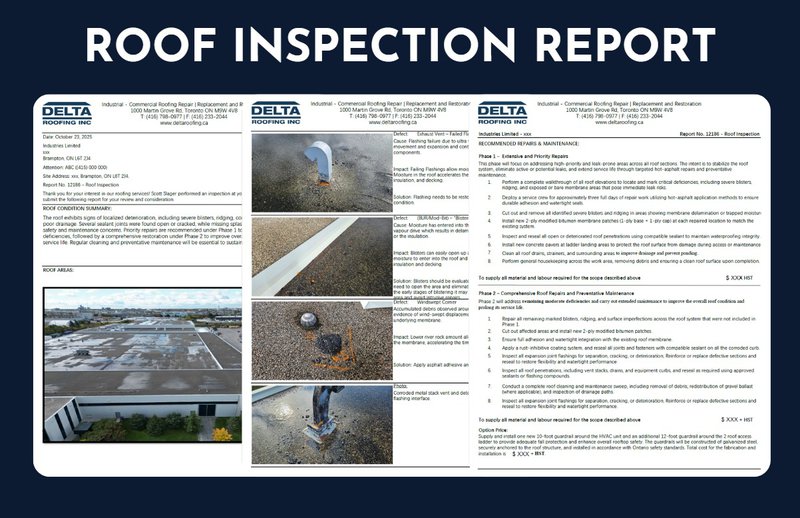
    ​A clear roof condition report does more than document current problems. It gives building owners and facility teams better information for future spending. Instead of reacting to leaks or waiting until repairs become urgent, they can plan maintenance, forecast larger costs, and make smarter capital decisions. Detailed condition analysis inspections support that process by providing an in-depth roof evaluation and a report with recommendations for repairs or upgrades.

    For property managers, plant managers, technical staff, procurement teams, and building owners, that matters. Capital planning is easier when the roof is not a guess.

    Why Roof Condition Matters in Capital Planning

    Roofing decisions affect more than the roof itself. A declining system can lead to leaks, interior disruption, insulation damage, and higher repair costs when issues are left too long.

    That is why roof condition should be part of a larger capital planning discussion. When decision-makers know what stage the roof is in, they can better judge whether the next step is routine maintenance, larger repairs, a coating system, or full replacement. A strong report helps turn that into a planned decision instead of a rushed one.

    default

    ​What a Detailed Roof Condition Report Should Show

    A useful report should do more than say the roof looks worn. It should explain what is happening, where the problem areas are, and what those issues may lead to if they are not addressed.

    Detailed condition analysis inspections can check key roof components such as decking, supports, materials, and the overall system. They can also point out repair needs and recommend upgrades. Pre-purchase or pre-handoff inspections can help estimate roof lifespan, current condition, and future maintenance or replacement needs.

    For capital planning, that level of detail helps teams understand:

    • current roof performance
    • repair priorities
    • whether issues are isolated or widespread
    • how close the roof may be to a larger investment decision

    That gives owners and managers a stronger basis for budget discussions.

    How Better Reporting Improves Budget Timing

    One of the biggest planning challenges in roofing is timing. If a problem is found too late, the budget often has to adjust around an urgent need. If it is identified earlier, the work can usually be scheduled with more control.

    That is where a detailed roof condition report helps. It gives teams a clearer view of near-term and longer-term needs, making it easier to separate immediate repairs from work that can wait for the next budget cycle.

    This works especially well when reporting is tied to regular Maintenance & Repair. In simple terms, better reporting helps teams spend earlier in the right places instead of spending later under pressure.

    Why Roof Reports Help Avoid Premature Replacement

    A roof that looks rough is not always ready for replacement. At the same time, a roof that still appears serviceable may be carrying more risk than expected. A detailed report helps clarify that difference.

    When the roof still has useful life left, targeted repairs may be enough. In cases where wear is broader, but the system is still a good candidate for restoration, Coating Systems may offer a longer-term option. If repairs are no longer worthwhile, a Roof Replacement becomes easier to justify in the capital plan.

    That clarity helps building teams avoid both extremes: replacing too soon or waiting too long.

    Where Condition Reports Add Value During Property Decisions

    Detailed reporting is also useful when a building is being acquired, handed off, or reviewed before a major operational change. In those situations, roof spending may not be part of the original plan, but it can quickly become part of the discussion.

    Delta Roofing’s pre-purchase or pre-handoff inspections are designed to evaluate roof condition before a property transaction or final handoff, including roof lifespan, repair needs, upgrade needs, and future maintenance or replacement costs.

    For owners and procurement teams, that matters because it turns the roof into a measurable part of due diligence. Instead of inheriting an unknown liability, they get a clearer picture of what the asset may require.

    How Inspections Support a Smarter Service Strategy

    A strong roof condition report should lead to action, not just documentation. Once the roof’s condition is clear, building teams can match the right service to the right need.

    That may mean:

    That is what makes reporting useful. It connects the condition of the roof to real planning decisions.

    A Better Way to Plan Ahead

    Detailed roof condition reports support better capital planning because they reduce uncertainty. They help building teams see what the roof needs now, what may be coming next, and which costs should be planned instead of delayed.

    For commercial, industrial, and institutional properties, that means better budget timing, better decisions, and fewer surprises. Delta Roofing supports that process through Estimates & Inspections, Maintenance & Repair, Coating Systems, and Roof Replacements.

    If your team needs a clearer picture of current roof condition before the next budget cycle, contact us to start with an inspection that supports better planning.

  • Infrared Drone Inspections, A Smarter Way to Detect Flat Roof Moisture

    Infrared Drone Inspections, A Smarter Way to Detect Flat Roof Moisture

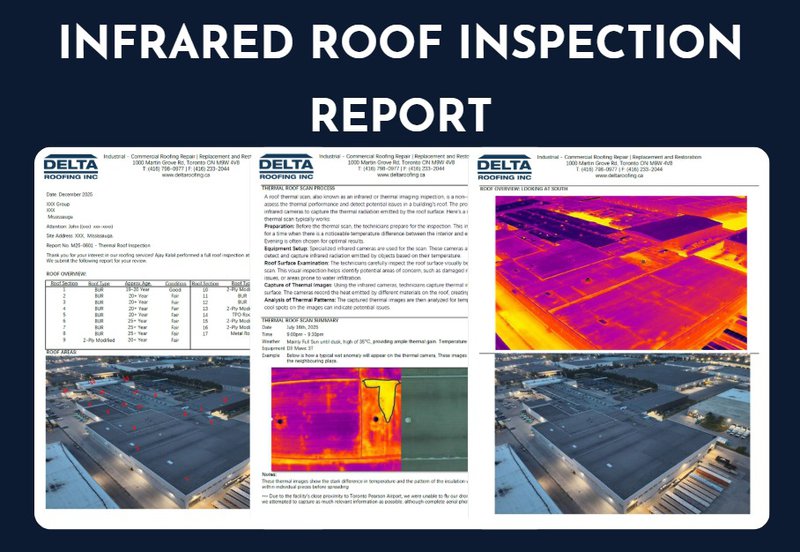
    ​A drone roof inspection uses a drone with thermal imaging to scan the roof and help spot hidden moisture before it becomes a bigger problem. On flat roofs, that matters. Moisture can spread below the surface long before there is a visible leak inside, affecting insulation, roof performance, and repair scope. Delta Roofing includes infrared drone inspections in its Estimates & Inspections service and says they are used to detect moisture intrusion, locate trapped moisture, and identify insulation degradation caused by leaks.

    For property managers, facility managers, plant managers, technical staff, procurement teams, and building owners, that means better information early. It supports faster decisions, more targeted repairs, and fewer surprises.

    Why Flat Roof Moisture Is Easy to Miss

    Flat roof moisture often stays hidden at first. Water can enter through seams, flashings, penetrations, or worn membrane areas, then move into insulation below the surface. The roof may still look fine from the ground, and there may be no visible stain or drip inside the building yet.

    That delay is what makes moisture expensive. By the time the problem becomes obvious indoors, the affected area may be larger than expected. A drone roof inspection helps close that gap by giving building teams another way to spot trouble earlier.

    How Infrared Drone Inspections Work

    Infrared drone inspections are different from a standard visual review. Instead of relying only on what can be seen on the surface, the drone uses thermal imaging to scan the roof and highlight temperature differences that may point to trapped moisture. Delta Roofing lists this method as part of its inspection offering and says it helps reveal hidden damage that might otherwise go unnoticed.

    That makes the process especially useful on flat roofs, where moisture can stay below the membrane and continue spreading over time.

    When a Drone Roof Inspection Makes the Most Sense

    A drone roof inspection can be especially useful when hidden moisture is suspected, when leaks keep returning, or when a building team needs better information before planning repairs or replacement.

    It can also help when:

    • the leak source is unclear
    • insulation performance may be declining
    • there are known trouble spots on the roof
    • a team needs better documentation before budgeting larger work

    Estimates & Inspections service also includes routine maintenance inspections, warranty inspections, detailed condition analysis inspections, and pre-purchase or pre-handoff inspections. The company presents each as a different level of review depending on the building’s condition and purpose.

    Why Better Detection Leads to Better Repairs

    The value of better moisture detection is not just finding the problem. It is knowing where to act.

    If hidden moisture is limited to one section, repairs can be more focused. If the affected area is broader, the team can respond before more of the roof is compromised. That helps reduce guesswork and improves repair planning.

    This is where Maintenance & Repair becomes important. Delta Roofing says routine maintenance and minor repairs help extend roof life, prevent unexpected damage, and remain the most cost-effective way to maintain overall roofing performance.

    What Hidden Moisture Can Mean for Long-Term Planning

    Sometimes an infrared scan points to a repair. Other times, it shows the roof is moving closer to a larger decision.

    If damage is still limited, ongoing repair may be enough. In other cases, a Coating System may help extend roof life. If repairs are no longer worthwhile, a full Roof Replacement may be the smarter move. Delta Roofing’s replacement page says that once repairs are no longer worthwhile, replacement becomes the only option.

    That is where a drone roof inspection adds real value. It helps teams move from uncertainty to a clearer next step.

    Why This Matters After Rooftop Changes

    Flat roofs often change over time. HVAC units are added. Mechanical systems are updated. New penetrations are made. Each change creates another area that needs proper detailing and follow-up review.

    Delta Roofing’s Alterations & Retrofits service covers rooftop air conditioner additions, mechanical or plumbing changes that require penetrations, and custom metal flashings, fabrication, and installation. The company says these services are meant to keep the roof strong, watertight, and free of damage during building changes.

    In these situations, an infrared scan can help confirm whether moisture has developed around new penetrations or stressed roof areas.

    A Smarter Way to Stay Ahead of Roof Moisture

    A drone roof inspection is not just a newer inspection method. It is a practical way to find hidden flat roof moisture sooner, plan repairs with better information, and avoid larger problems later.

    For commercial, industrial, and institutional buildings, that can mean better maintenance timing, stronger roof performance, and fewer costly surprises. Delta Roofing offers this through its Estimates & Inspections service, alongside Maintenance & Repair, Alterations & Retrofits, and Roof Replacements.

    If hidden moisture is a concern, contact us to schedule an inspection and get a clearer picture of your flat roof’s condition.

  • The Hidden Cost of Deferred Roof Maintenance for Industrial Facilities

    The Hidden Cost of Deferred Roof Maintenance for Industrial Facilities

    Delaying routine inspections, minor repairs, or planned service before roof problems get worse is what we call deferred roof maintenance. It may seem like a way to save money in the short term, but for industrial facilities, it often leads to higher costs later. Small roofing issues can turn into leaks, damaged insulation, emergency repairs, production disruption, and larger replacement needs. Delta Roofing says routine maintenance and repair help extend roof life, prevent unexpected damage, and maintain overall roofing system performance.

    For plant managers, facility managers, technical staff, procurement teams, and building owners, that makes roof maintenance more than a routine task. It is part of protecting the building, controlling operating costs, and keeping the facility running without avoidable interruptions.

    Why Deferred Roof Maintenance Gets Expensive Fast

    Most roofing problems do not start with a major failure. They begin with smaller issues that are easy to postpone, such as an open seam, worn flashing, standing water, or a weakening penetration around rooftop equipment.

    On an industrial facility, those problems rarely stay small. Once moisture enters the system, the cost can spread beyond the roof itself. Insulation performance can drop, interior areas can be affected, and equipment, materials, or operations below may be put at risk.

    That is why delayed roof maintenance often leads to higher costs. What could have been handled through planned service turns into urgent work under worse conditions.

    The Cost Is Not Only the Repair Bill

    When facilities defer roof maintenance, the cost often goes beyond the roofing invoice. A neglected roof can lead to higher repair costs, unplanned service calls, more pressure on maintenance teams, shorter roof life, and earlier replacement needs.

    For industrial facilities, downtime can be one of the biggest hidden costs. Even a small leak can affect production areas, storage, access routes, or building systems. At that point, the issue is no longer limited to the roof. It starts affecting how the facility runs.

    This is why regular Maintenance & Repair matters. Routine maintenance and minor repairs are a cost-effective way to maintain roofing system performance over time.

    a pair of roof maintenance men fixing a roof

    What Deferred Roof Maintenance Often Misses

    Deferred roof maintenance is risky because roof systems can decline without obvious signs inside the building. Problems may develop at flashings, seams, penetrations, drainage paths, low spots, or below the surface where insulation has taken on moisture. Aging sections may also be nearing the end of their service life. By the time the issue becomes visible indoors, the repair scope is often larger than expected.

    That is where Estimates & Inspections add value. Inspections help assess roof condition, identify needed repairs or upgrades, and estimate future maintenance or replacement costs.

    Industrial Facilities Need a Different Roofing Mindset

    Industrial properties are not managed the same way as smaller commercial buildings. The stakes are different. Roof decisions may affect production schedules, tenant obligations, safety planning, inventory protection, and capital budgeting. Because of that, roof maintenance should be treated as an operational decision, not just a repair issue.

    A planned roofing approach helps teams:

    • schedule work before failures disrupt operations
    • coordinate roofing needs with plant or facility activity
    • reduce emergency situations
    • make better use of maintenance budgets
    • plan ahead for future repair or replacement work

    This is also where detailed reporting becomes useful. A clear view of roof condition helps decision-makers separate minor repairs from signs of broader system wear.

    Rooftop Changes Can Add More Risk When Maintenance Is Deferred

    Industrial roofs often change over time. Equipment is added, systems are updated, and new penetrations are made to support operations. If those areas are not detailed and maintained properly, they can become weak points.

    Deferred roof maintenance increases that risk. A penetration that looked sound after installation may not stay that way. Without follow-up review and care, it can become a source of leaks and ongoing deterioration.

    That is why Alterations & Retrofits should be tied to ongoing roof care.

    When Deferred Maintenance Turns into Emergency Work

    One of the clearest hidden costs of deferred roof maintenance is the shift from planned work to emergency response.

    Emergency service is essential when sudden damage happens, but it is rarely the most efficient way to manage a roof over time. Delta Roofing says its Emergency Repair Service is available when unexpected repairs are needed.

    When issues are handled earlier, teams usually have more control over cost, timing, and repair scope. When they are delayed, the options narrow and the urgency grows.

    How Roof Maintenance Supports Better Long-Term Decisions

    Routine roof maintenance also helps facilities decide when repair is still practical and when a larger investment is the better move.

    Some roofs can continue performing well with ongoing repairs. Others may be better candidates for Coating Systems or a full Roof Replacement. Delta Roofing lists both services as part of its commercial, industrial, and institutional roofing offering.

    The advantage of consistent maintenance is that these decisions can be made earlier, with better information and less pressure.

    A Smarter Way to Protect Industrial Facilities

    The hidden cost of deferred roof maintenance is not just the repair itself. It is the added damage, the shorter roof life, the disruption to operations, and the loss of control that comes with waiting too long.

    For industrial facilities, routine maintenance is a practical way to protect the building and reduce avoidable cost over time. Delta Roofing offers services that support that full process, from Estimates & Inspections and Maintenance & Repair to Emergency Repair Service and Roof Replacements.

    If your facility has been putting off roof work, contact us to assess current roof conditions and address small problems before they turn into larger ones.

  • How Routine Commercial Roof Inspections Cut Energy Waste in Buildings

    How Routine Commercial Roof Inspections Cut Energy Waste in Buildings

    ​Commercial roof inspections do more than catch leaks. They also help reduce energy waste, protect roof performance, and support better cost control across the building.

    In commercial, industrial, and institutional properties, the roof is part of the building envelope. When it starts to weaken, the effect is not limited to water intrusion. Moisture, damaged details, and failing seals can reduce performance and make heating and cooling systems work harder. Over time, that can increase utility costs and put more strain on the building.

    For property managers, facility managers, plant managers, technical staff, procurement teams, and building owners, routine commercial roof inspections are a practical way to catch issues early and avoid bigger problems later.

    Why the Roof Affects Building Energy Use

    A roof does not need a major leak to start wasting energy. Small failures can affect how well the building holds conditioned air and resists outside weather.

    On flat and low-slope roofs, weak areas often develop slowly. Seams can open. Flashings can wear down. Penetrations around rooftop equipment can lose their seal. Moisture can also enter the system before any interior damage is visible. When that happens, roof performance starts to decline, even if the problem has not yet become urgent.

    That is why Estimates & Inspections matter. They help building teams understand roof condition before minor wear turns into wasted energy, emergency calls, or a larger repair scope.

    Where Commercial Buildings Lose Energy at the Roof Level

    Energy loss at the roof level often starts in a few common areas. Wet insulation is one of them. Once moisture enters the roof system, performance can decline even before there is visible interior damage.

    Other problem areas include failing flashings at walls, curbs, and edges, along with weak seals around penetrations for HVAC, vents, and other rooftop equipment. Poor drainage is another concern. When water sits too long on the roof, it increases wear and puts more stress on already vulnerable areas.

    This is where regular Maintenance & Repair becomes important. Delta Roofing says routine maintenance and minor repairs help extend roof life, prevent unexpected damage, and maintain overall roofing system performance.

    default

    Routine Commercial Roof Inspections Actually Look For

    A routine inspection should do more than confirm whether a roof is leaking. It should give the building team a clearer picture of roof condition and developing risk areas.

    • That review often includes:
    • membrane condition
    • flashings
    • seams
    • roof penetrations
    • drainage paths
    • visible signs of trapped moisture
    • surface breakdown
    • areas around rooftop equipment

    ​Areas around rooftop equipment need close attention because they often have more stress, more detailing complexity, and more opportunities for leaks or performance issues.

    ​Inspection services can include routine maintenance inspections, warranty inspections, infrared drone inspections, detailed condition analysis inspections, and pre-purchase or pre-handoff inspections. That range is useful because different buildings need different levels of review based on age, condition, upcoming repair needs, and replacement planning. For building teams, this kind of reporting helps separate minor issues from more serious concerns before they grow.

    How Inspections Help Building Teams Make Better Maintenance Decisions

    Routine commercial roof inspections help teams move from reactive work to planned maintenance. That is one of their biggest advantages.

    Without a clear inspection record, roofing decisions often happen after a leak, a complaint, or an urgent service call. That usually leads to rushed repairs and less control over cost. With regular inspections, teams can prioritize work sooner, plan repairs more accurately, and budget with better information.

    That also supports Delta Roofing’s broader service approach. Once conditions are identified, issues can be addressed through Maintenance & Repair before they become more disruptive.

    Why Rooftop Equipment Changes Should Trigger a New Inspection

    Many commercial roofs are changed over time. New HVAC units are installed. Mechanical systems are updated. Plumbing work creates new penetrations. These upgrades may be necessary, but they also create new risk points.

    Any change to rooftop equipment should be followed by a roof review. Penetrations, curbs, and transition areas need to be checked to make sure they are sealed correctly and not creating weak points in the system.

    That is where Alterations & Retrofits fit in. When rooftop changes are handled properly and followed by inspection, the roof is in a stronger position to keep performing the way it should.

    When an Inspection Shows Repair, Restoration, or Replacement Is the Better Move

    Not every inspection leads to the same answer. Some roofs need a minor repair, while others need urgent service or a larger long-term solution. The next step may include:

    The value of the inspection is that it helps building teams choose the right path based on condition, not guesswork.

    Why Routine Commercial Roof Inspections Support Long-Term Building Performance

    Routine commercial roof inspections reduce uncertainty. They help identify where energy waste may be starting, where repairs should come first, and when a larger roofing decision may be needed.

    For commercial, industrial, and institutional properties, that matters. Better inspections lead to better maintenance timing, stronger roof performance, and less disruption. They also help protect the building below while reducing avoidable energy loss.

    If you want a clearer picture of your roof’s condition, contact us to schedule an inspection and get ahead of costly issues before they grow.

  • Hello world!

    Welcome to WordPress. This is your first post. Edit or delete it, then start writing!