
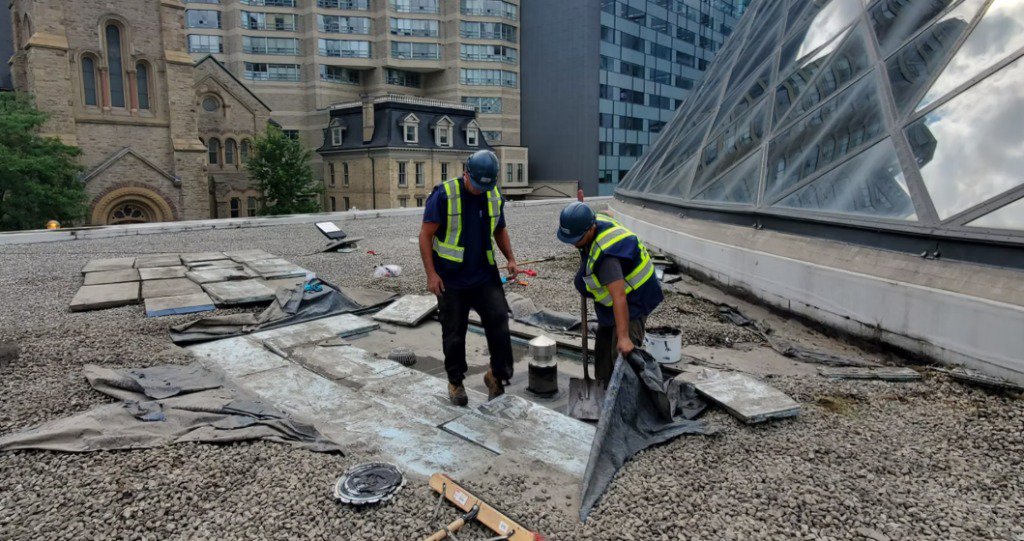
Commercial roof inspections do more than catch leaks. They also help reduce energy waste, protect roof performance, and support better cost control across the building.
In commercial, industrial, and institutional properties, the roof is part of the building envelope. When it starts to weaken, the effect is not limited to water intrusion. Moisture, damaged details, and failing seals can reduce performance and make heating and cooling systems work harder. Over time, that can increase utility costs and put more strain on the building.
For property managers, facility managers, plant managers, technical staff, procurement teams, and building owners, routine commercial roof inspections are a practical way to catch issues early and avoid bigger problems later.
Why the Roof Affects Building Energy Use
A roof does not need a major leak to start wasting energy. Small failures can affect how well the building holds conditioned air and resists outside weather.
On flat and low-slope roofs, weak areas often develop slowly. Seams can open. Flashings can wear down. Penetrations around rooftop equipment can lose their seal. Moisture can also enter the system before any interior damage is visible. When that happens, roof performance starts to decline, even if the problem has not yet become urgent.
That is why Estimates & Inspections matter. They help building teams understand roof condition before minor wear turns into wasted energy, emergency calls, or a larger repair scope.
Where Commercial Buildings Lose Energy at the Roof Level
Energy loss at the roof level often starts in a few common areas. Wet insulation is one of them. Once moisture enters the roof system, performance can decline even before there is visible interior damage.
Other problem areas include failing flashings at walls, curbs, and edges, along with weak seals around penetrations for HVAC, vents, and other rooftop equipment. Poor drainage is another concern. When water sits too long on the roof, it increases wear and puts more stress on already vulnerable areas.
This is where regular Maintenance & Repair becomes important. Delta Roofing says routine maintenance and minor repairs help extend roof life, prevent unexpected damage, and maintain overall roofing system performance.

Routine Commercial Roof Inspections Actually Look For
A routine inspection should do more than confirm whether a roof is leaking. It should give the building team a clearer picture of roof condition and developing risk areas.
- That review often includes:
- membrane condition
- flashings
- seams
- roof penetrations
- drainage paths
- visible signs of trapped moisture
- surface breakdown
- areas around rooftop equipment
Areas around rooftop equipment need close attention because they often have more stress, more detailing complexity, and more opportunities for leaks or performance issues.
Inspection services can include routine maintenance inspections, warranty inspections, infrared drone inspections, detailed condition analysis inspections, and pre-purchase or pre-handoff inspections. That range is useful because different buildings need different levels of review based on age, condition, upcoming repair needs, and replacement planning. For building teams, this kind of reporting helps separate minor issues from more serious concerns before they grow.
How Inspections Help Building Teams Make Better Maintenance Decisions
Routine commercial roof inspections help teams move from reactive work to planned maintenance. That is one of their biggest advantages.
Without a clear inspection record, roofing decisions often happen after a leak, a complaint, or an urgent service call. That usually leads to rushed repairs and less control over cost. With regular inspections, teams can prioritize work sooner, plan repairs more accurately, and budget with better information.
That also supports Delta Roofing’s broader service approach. Once conditions are identified, issues can be addressed through Maintenance & Repair before they become more disruptive.

Why Rooftop Equipment Changes Should Trigger a New Inspection
Many commercial roofs are changed over time. New HVAC units are installed. Mechanical systems are updated. Plumbing work creates new penetrations. These upgrades may be necessary, but they also create new risk points.
Any change to rooftop equipment should be followed by a roof review. Penetrations, curbs, and transition areas need to be checked to make sure they are sealed correctly and not creating weak points in the system.
That is where Alterations & Retrofits fit in. When rooftop changes are handled properly and followed by inspection, the roof is in a stronger position to keep performing the way it should.
When an Inspection Shows Repair, Restoration, or Replacement Is the Better Move
Not every inspection leads to the same answer. Some roofs need a minor repair, while others need urgent service or a larger long-term solution. The next step may include:
- Emergency Repair Service for sudden severe damage
- ongoing repairs if the roof still has useful life left
- a Roof Replacement if wear is more widespread
- Coating Systems when extending roof life is still a practical option
The value of the inspection is that it helps building teams choose the right path based on condition, not guesswork.
Why Routine Commercial Roof Inspections Support Long-Term Building Performance
Routine commercial roof inspections reduce uncertainty. They help identify where energy waste may be starting, where repairs should come first, and when a larger roofing decision may be needed.
For commercial, industrial, and institutional properties, that matters. Better inspections lead to better maintenance timing, stronger roof performance, and less disruption. They also help protect the building below while reducing avoidable energy loss.
If you want a clearer picture of your roof’s condition, contact us to schedule an inspection and get ahead of costly issues before they grow.
Leave a Reply