
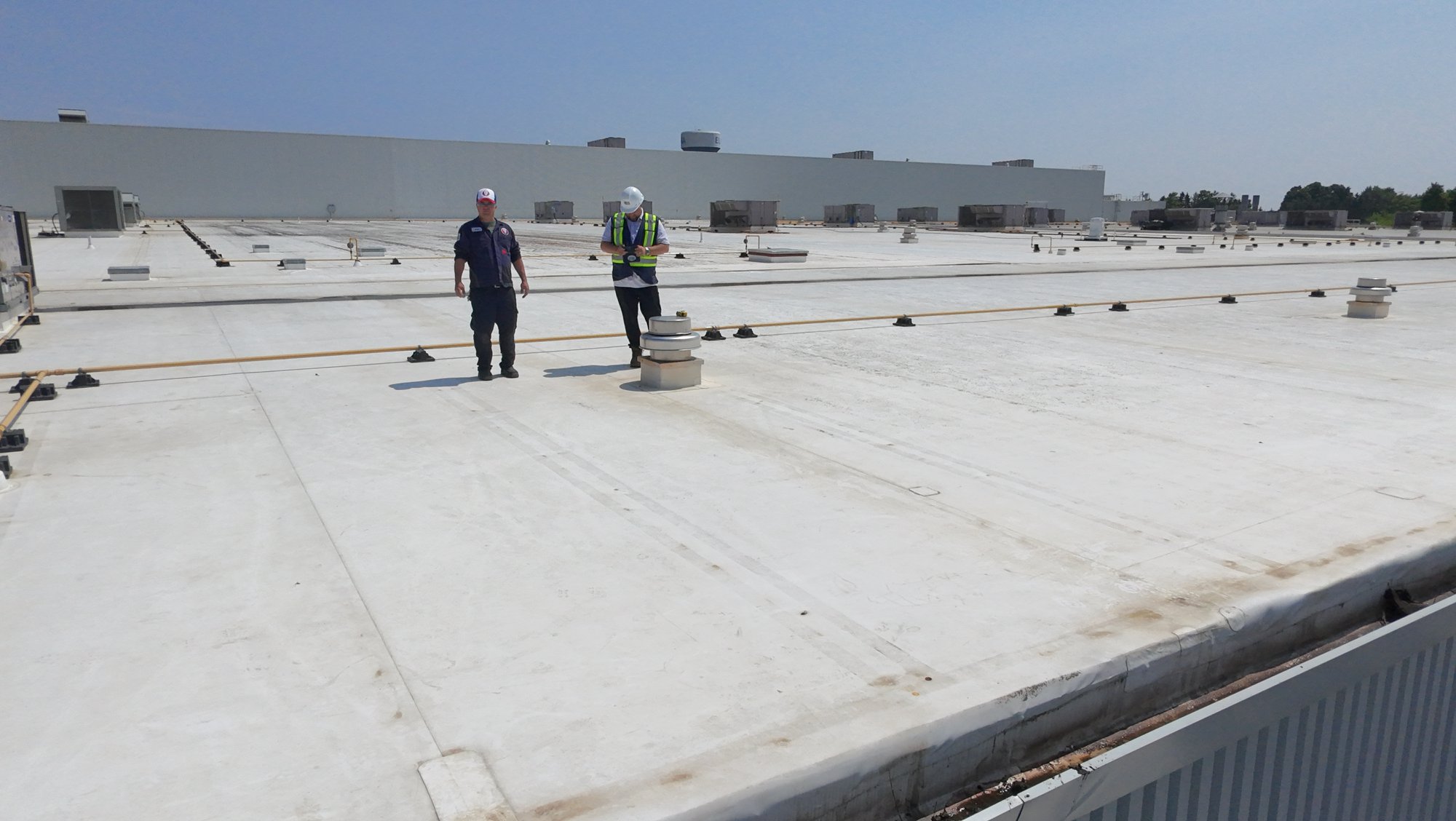
A clear roof condition report does more than document current problems. It gives building owners and facility teams better information for future spending. Instead of reacting to leaks or waiting until repairs become urgent, they can plan maintenance, forecast larger costs, and make smarter capital decisions. Detailed condition analysis inspections support that process by providing an in-depth roof evaluation and a report with recommendations for repairs or upgrades.
For property managers, plant managers, technical staff, procurement teams, and building owners, that matters. Capital planning is easier when the roof is not a guess.
Why Roof Condition Matters in Capital Planning
Roofing decisions affect more than the roof itself. A declining system can lead to leaks, interior disruption, insulation damage, and higher repair costs when issues are left too long.
That is why roof condition should be part of a larger capital planning discussion. When decision-makers know what stage the roof is in, they can better judge whether the next step is routine maintenance, larger repairs, a coating system, or full replacement. A strong report helps turn that into a planned decision instead of a rushed one.

What a Detailed Roof Condition Report Should Show
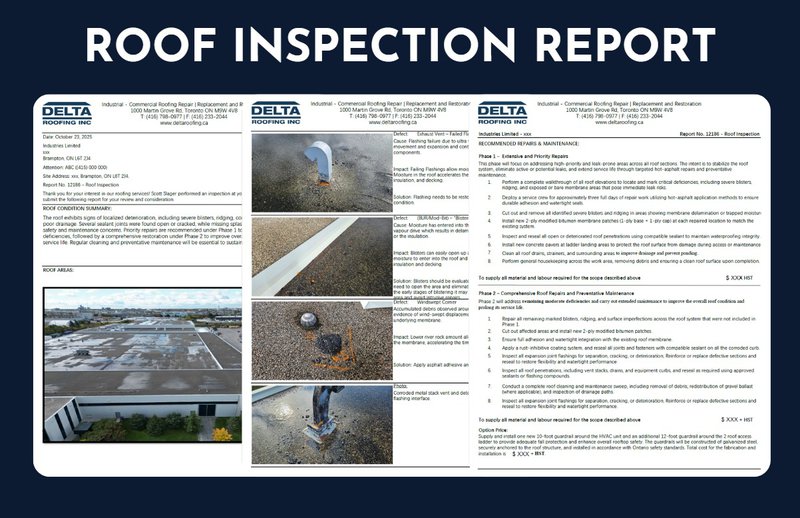
A useful report should do more than say the roof looks worn. It should explain what is happening, where the problem areas are, and what those issues may lead to if they are not addressed.
Detailed condition analysis inspections can check key roof components such as decking, supports, materials, and the overall system. They can also point out repair needs and recommend upgrades. Pre-purchase or pre-handoff inspections can help estimate roof lifespan, current condition, and future maintenance or replacement needs.
For capital planning, that level of detail helps teams understand:
- current roof performance
- repair priorities
- whether issues are isolated or widespread
- how close the roof may be to a larger investment decision
That gives owners and managers a stronger basis for budget discussions.
How Better Reporting Improves Budget Timing
One of the biggest planning challenges in roofing is timing. If a problem is found too late, the budget often has to adjust around an urgent need. If it is identified earlier, the work can usually be scheduled with more control.
That is where a detailed roof condition report helps. It gives teams a clearer view of near-term and longer-term needs, making it easier to separate immediate repairs from work that can wait for the next budget cycle.
This works especially well when reporting is tied to regular Maintenance & Repair. In simple terms, better reporting helps teams spend earlier in the right places instead of spending later under pressure.
Why Roof Reports Help Avoid Premature Replacement
A roof that looks rough is not always ready for replacement. At the same time, a roof that still appears serviceable may be carrying more risk than expected. A detailed report helps clarify that difference.
When the roof still has useful life left, targeted repairs may be enough. In cases where wear is broader, but the system is still a good candidate for restoration, Coating Systems may offer a longer-term option. If repairs are no longer worthwhile, a Roof Replacement becomes easier to justify in the capital plan.
That clarity helps building teams avoid both extremes: replacing too soon or waiting too long.
Where Condition Reports Add Value During Property Decisions
Detailed reporting is also useful when a building is being acquired, handed off, or reviewed before a major operational change. In those situations, roof spending may not be part of the original plan, but it can quickly become part of the discussion.
Delta Roofing’s pre-purchase or pre-handoff inspections are designed to evaluate roof condition before a property transaction or final handoff, including roof lifespan, repair needs, upgrade needs, and future maintenance or replacement costs.
For owners and procurement teams, that matters because it turns the roof into a measurable part of due diligence. Instead of inheriting an unknown liability, they get a clearer picture of what the asset may require.
How Inspections Support a Smarter Service Strategy
A strong roof condition report should lead to action, not just documentation. Once the roof’s condition is clear, building teams can match the right service to the right need.
That may mean:
- Maintenance & Repair for routine issues and life extension
- Emergency Repair Service when sudden severe damage needs fast response
- Alterations & Retrofits when rooftop equipment changes create new penetrations or detailing needs
- Roof Replacements when repairs are no longer the right long-term choice
That is what makes reporting useful. It connects the condition of the roof to real planning decisions.
A Better Way to Plan Ahead
Detailed roof condition reports support better capital planning because they reduce uncertainty. They help building teams see what the roof needs now, what may be coming next, and which costs should be planned instead of delayed.
For commercial, industrial, and institutional properties, that means better budget timing, better decisions, and fewer surprises. Delta Roofing supports that process through Estimates & Inspections, Maintenance & Repair, Coating Systems, and Roof Replacements.
If your team needs a clearer picture of current roof condition before the next budget cycle, contact us to start with an inspection that supports better planning.
Leave a Reply